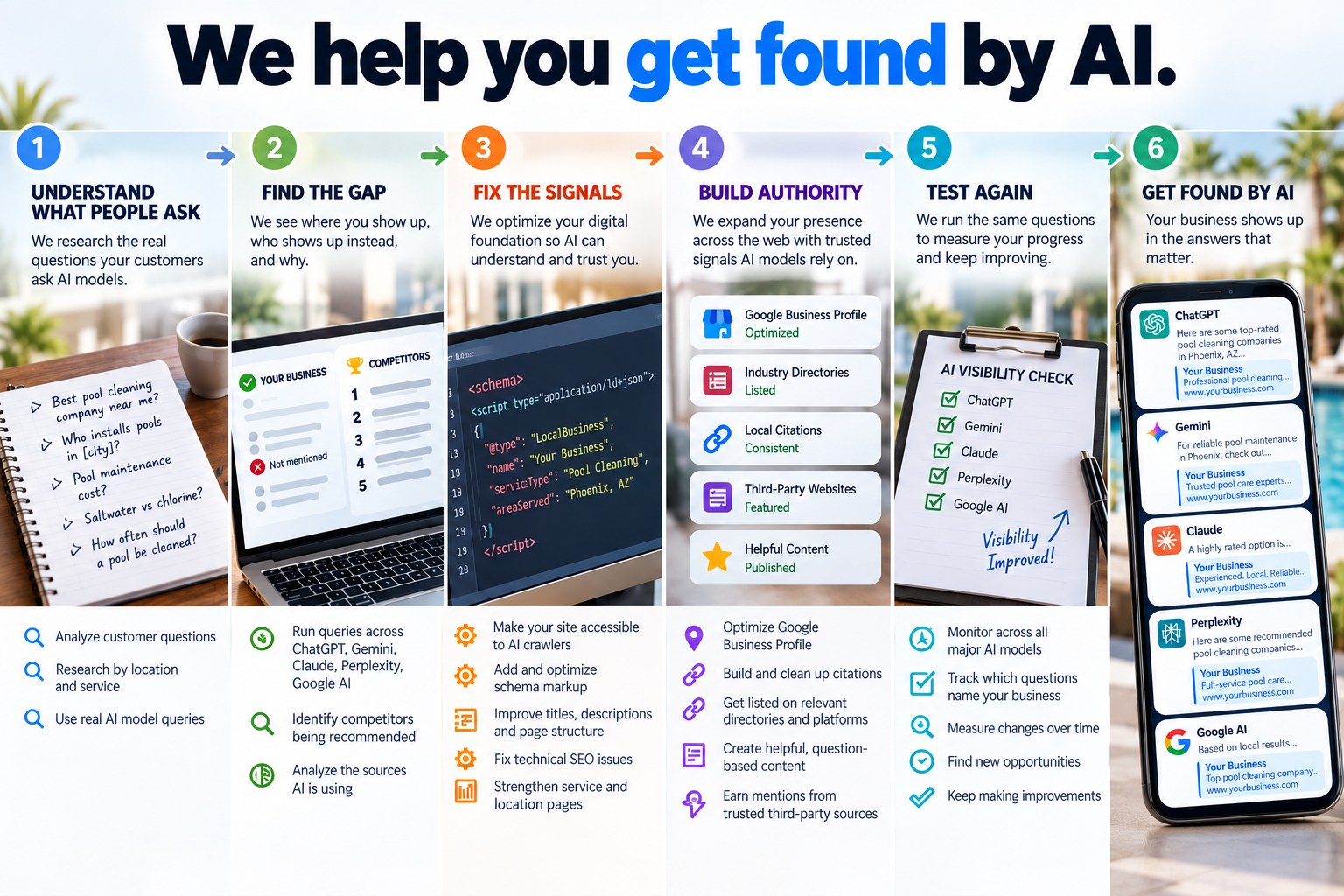
Physician practices get named in AI answers by publishing clinician reviewed condition and service pages that answer the patient's question first, keeping one set of facts across the website and every directory, handling reviews without disclosing patient information, and letting the AI search crawlers in. The bottom line: patients ask AI health questions in growing numbers, those answers send some of them to a practice, and an accurate, reviewed, consistent site is what an answer engine can safely quote. This guide applies our main explainer on answer engine optimization to physician practices.
Why practices should care now
KFF's May 2026 tracking poll found 29 percent of US adults use AI tools or chatbots at least monthly for health information and advice, nearly double the 17 percent in June 2024, and its March 2026 poll found about 1 in 5 of those users said not being able to afford a visit (19 percent) or not having a regular doctor or an appointment (18 percent) was a major reason. So the people asking AI about symptoms include people who do not have a doctor yet. BrightLocal's 2026 survey found 45 percent of consumers had used an AI tool to find a local business recommendation, up from 6 percent in 2025.
Seven steps for a physician practice
- Write condition and service pages for patients. Lead with the answer in the first 40 to 60 words: what the condition or service is, when to call, and what a visit involves. Have a clinician review each page and show the reviewer's name and credentials and the review date.
- Say when to seek care. AI tools get many urgent questions. State clearly which symptoms need emergency care, and give the after hours number.
- Show the clinicians. Name, specialty, board certification, training, and hospital affiliations on a page of their own, matching your directory profiles.
- Publish the practical facts. Insurance accepted, how to book, telehealth options, locations, and hours, in short answers.
- Use accurate schema. The schema.org types
PhysicianandMedicalClinicexist for this, and Google says markup must match the visible text and that no special schema is needed for its AI features. - Handle reviews with care. Reply with a thank you and an invitation to call, and never confirm that someone is a patient or mention care. Our guides on asking for reviews and review requests and HIPAA cover the rules.
- Let the search crawlers in. OpenAI says sites that opt out of
OAI-SearchBotare not shown in ChatGPT search answers, and Anthropic says blockingClaude-SearchBotmay reduce visibility in Claude search. Check robots.txt and your firewall, and keep the content in the page HTML, because the major AI crawlers do not run JavaScript, according to Vercel.
Limits to respect
Do not publish patient stories or photos without a signed authorization, do not offer individual medical advice in a page meant for the public, and keep claims about outcomes to what you can support. The practice, not the AI tool, is responsible for what its site says, and an answer engine may quote your words back to a patient.
How to check your results
Pick 20 to 30 questions your customers ask, run each one three times on ChatGPT, Gemini, and Perplexity, and record how often your business is named. SparkToro and Gumshoe found less than a 1 in 100 chance that two responses returned the same brand list, so repeated runs matter. Our guide on how to measure answer engine optimization has the method, and our answer engine optimization checklist covers 30 checks in five groups. For a first look, run our free answer engine optimization check.
Questions people ask
Do patients use AI for health questions?
KFF's May 2026 poll found 29 percent of US adults use AI tools or chatbots at least monthly for health information and advice, up from 17 percent in June 2024.
What should a condition page say first?
What the condition is, when to call or seek emergency care, and what a visit involves, reviewed by a clinician with the review date shown.
Can a practice reply to an online review?
Reply with a thank you and an invitation to call, and do not confirm that the person is a patient or mention care. OCR has penalized health practices for replies that disclosed patient information.
Does a practice need special schema?
Google says no special schema is needed for its AI features. The schema.org Physician and MedicalClinic types are useful when their facts match the page.
Sources
- KFF: Use of social media and AI for health information and advice (May 2026)
- KFF: Use of AI for health information and advice (March 2026)
- BrightLocal: Local Consumer Review Survey 2026
- schema.org: Physician
- schema.org: MedicalClinic
- Google Search Central: AI features and your website
- OpenAI: Overview of OpenAI crawlers
- SparkToro and Gumshoe: AI recommendation consistency