A heavy civil prime assembles its bid from subcontractor and supplier quotes for the specialty scopes it does not self perform, and gaps in that coverage on bid day expose the number. Knowing which scopes need coverage is half the battle.
What sub coverage means on a civil bid
A civil prime self performs some work, earthwork, paving, or structures, and subcontracts specialty scopes such as electrical, signals, landscaping, striping, and specialty foundations, plus material supply. The proposal and the specifications define the scopes, and the prime needs quotes covering each subcontracted item by bid day. Missing coverage on a scope means carrying an unpriced risk or an allowance into the bid.
Why coverage gaps happen
The full set of scopes in a heavy civil project sits across the bid schedule, the specifications, and the plans, and identifying every subcontracted scope that needs a quote, against what the prime self performs, takes a careful read of each letting. Under deadline a prime can miss a specialty scope and discover the gap when quotes are tallied.
How an AI bid agent maps coverage
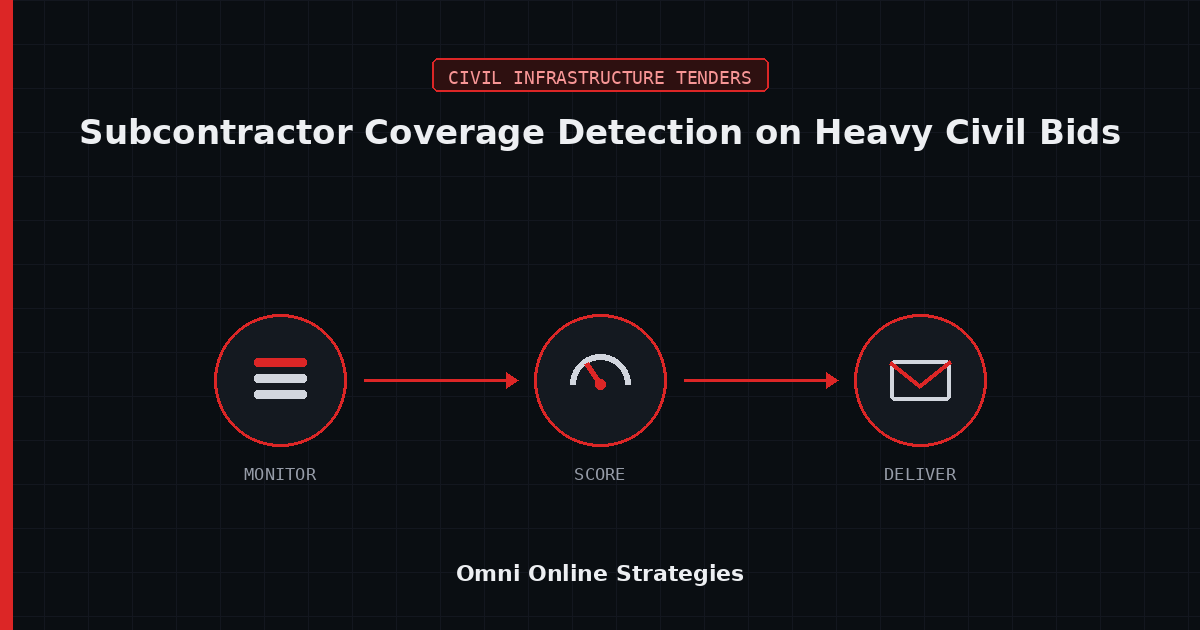
An AI bid agent reads each letting, identifies the scopes in the project against the contractor's self perform profile, and surfaces the subcontracted scopes that need quotes and any listing requirement. The prime sees the coverage it must assemble before bid day.
You can see how the agent maps scope in our AI tender agent demo for civil and infrastructure contractors. It surfaces the subcontracted scopes that need coverage against what you self perform.