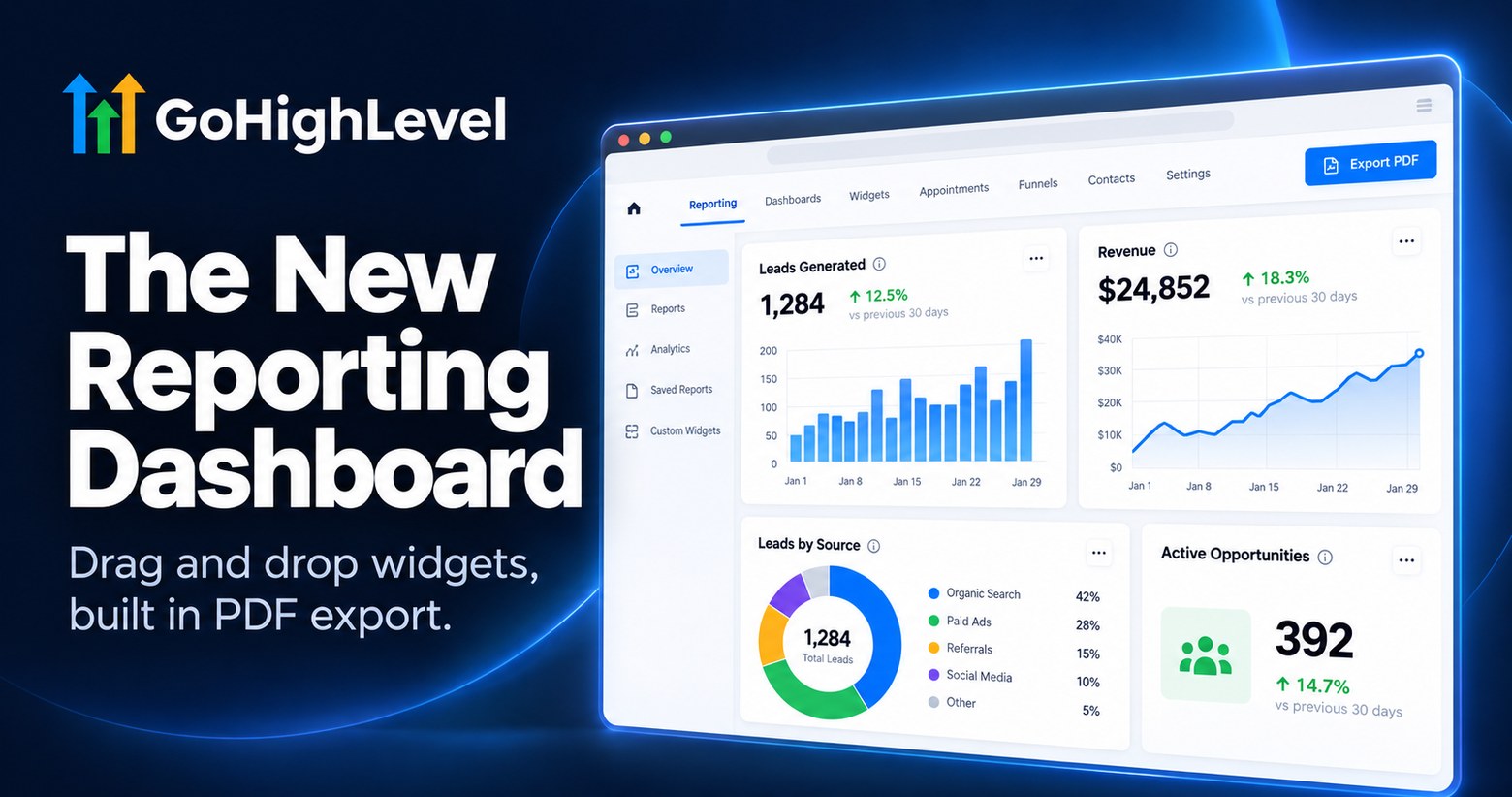
GoHighLevel shipped the most complete overhaul of its analytics in the platform's history in April 2026, replacing static, limited filtering reports with a real drag and drop widget system. This is what actually changed, what it still cannot do, and where the real gap against a dedicated reporting tool remains.
What the old dashboard actually was
Before April 2026, GoHighLevel's reporting produced static reports with limited filtering, a fixed set of views rather than something an agency could reshape around how it actually reports to a client. Practitioners who built custom setups for clients on the old system described the default dashboard bluntly: the widgets were too generic, filters were not set up for a specific business model, and there was no real structure behind what was being shown, noise rather than insight, in the words of one agency operator who documented rebuilding a client's dashboard from scratch before the update shipped.
What the rebuild actually added
The new system is a genuine drag and drop widget builder, not a relabeled version of the old fixed reports. Every sub account on all three paid tiers, $97, $297, and $497 a month, now gets multiple custom dashboards and fully customizable reports, a real expansion from before, when the Starter plan did not include custom reporting at all. Widgets can be built as Numeric, Donut, Line, Bar, Table, or Funnel chart types, and a business can run separate dashboards for sales, marketing, and finance, setting one as the default view for the team.
The specific widgets that actually exist
The available widget library covers pipeline revenue by stage and by date range, call volume and duration by team member, email deliverability rates broken down by bounce and complaint, SMS delivery rates, funnel conversion rates per step, and ad spend versus lead cost once Facebook and Google Ads are connected through the native integration. A separate Google Analytics widget set, added once a GA4 property is connected, layers in Total Users, Engagement Rate, and Sessions by Channel, so web behavior sits alongside pipeline and revenue data in the same view instead of requiring a separate tab.
Custom Object Widgets, a related but distinct feature
A separate capability, Custom Object Widgets, shipped earlier, in January 2026, and is easy to conflate with the April reporting rebuild but is worth knowing as its own thing. It lets an account turn its own custom objects, properties, cases, pets, projects, whatever the business actually tracks beyond standard CRM records, into real time charts inside a dashboard. For a business running anything beyond the standard contact and opportunity model, this is often more useful than the general reporting widgets, because it reports on the business's actual data structure, not a generic CRM shape.
The built in PDF export, and what it actually replaces
A dashboard or custom report can now be exported as a branded PDF and scheduled to deliver automatically, commonly monthly, straight to a client's inbox. This replaces what used to require a manual screenshot and format pass, or a separate tool layered on top of GoHighLevel purely to produce a clean client facing report. One real timezone detail worth knowing before scheduling anything: the report builder's date range uses the browser's timezone, while the scheduled email preview uses the sub account's timezone, two different clocks that can silently disagree if nobody checks.
What still genuinely falls short
A third party reporting specialist that has tracked GoHighLevel's limitations closely puts it plainly: the platform lacks in depth analytics, there is no way to run a real cohort analysis on repeat purchase behavior, and the widgets, while more flexible than before, are still not truly custom, an account is limited to the widget types GoHighLevel itself has built, not an open ended query builder. For an agency whose client reporting needs go past what those widget types cover, a dedicated business intelligence tool layered on top is still the honest answer, not a claim this update replaces one.
The bottom line: this is a real, substantial upgrade to a part of the platform that was genuinely weak, not a cosmetic refresh. It closes real ground against dedicated reporting tools without fully closing the gap, and for the large majority of agencies and small businesses running client reporting through GoHighLevel, it is now enough.
Ready to try it yourself? Start a GoHighLevel account here.
You can also see this in action in our GoHighLevel capabilities demo.