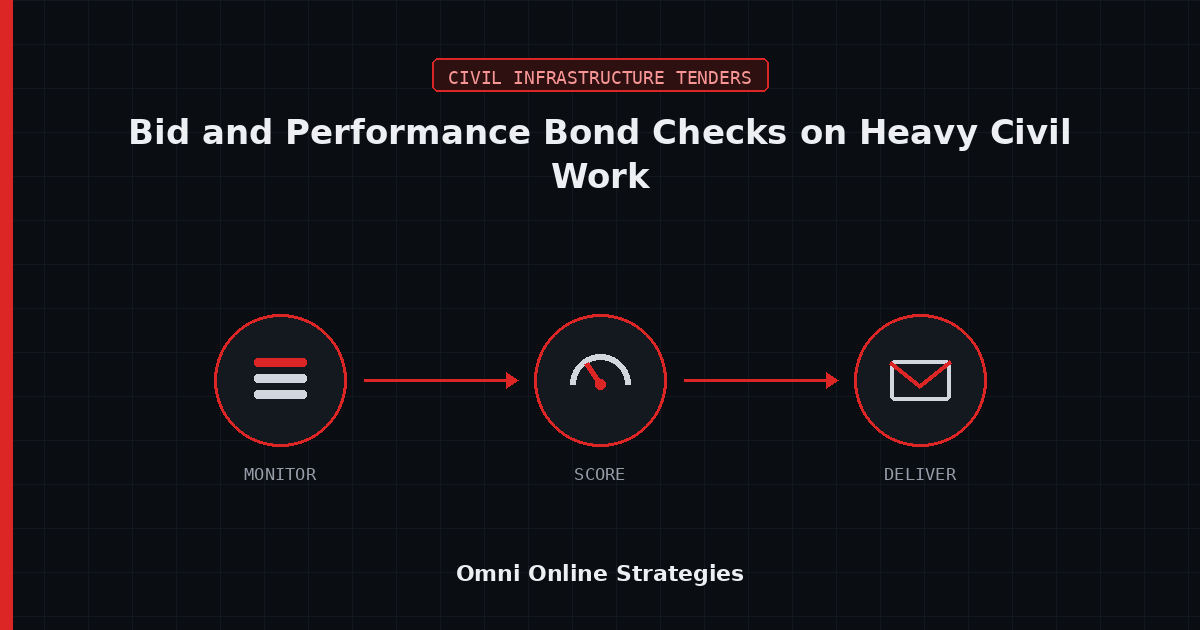
Public heavy civil work requires a bid bond with the proposal and performance and payment bonds at award, and the bonding capacity a project demands decides whether a civil contractor can pursue it at all.
What the bonding requirements set
Public civil contracts require a bid bond or guaranty submitted with the proposal, and performance and payment bonds, commonly at the full contract value, at award, under the Miller Act on federal work and Little Miller Act statutes on state and local work. The bonds protect the owner and the project's subcontractors and suppliers. The required amounts set both a cost and an eligibility test tied to the contractor's surety program and single project and aggregate capacity.
Why bonding thresholds are easy to miss
The bid, performance, and payment bond requirements sit in the proposal and the special provisions, and the amount a project consumes against the contractor's capacity depends on the contract value and current backlog. A contractor that pursues a letting beyond its single project limit, or that stacks bonded work past the aggregate, wastes estimating effort on work it cannot bond.
How an AI agent checks bonding requirements
An AI bid agent reads each heavy civil letting for the bid and performance and payment bond requirements and the contract value, and scores them against the contractor's single project and aggregate capacity and backlog. Projects that fit rise in the digest; those beyond capacity are flagged with the reason.
You can see the bonding fit scoring in our AI tender agent demo for civil and infrastructure contractors. It scores the bond requirements against your capacity and backlog so effort goes to bondable work.