Every state DOT publishes a standard specifications book that governs how road and bridge work is built and measured, and a civil contractor that does not read the version and the special provisions on a letting is bidding against the wrong rules.
What the standard specifications govern
Each state DOT maintains a standard specifications for road and bridge construction, the master document that defines materials, construction methods, measurement, and payment for every bid item, updated on a cycle and supplemented by special provisions on each project. The standard specs decide how earthwork, paving, drainage, and structures are built and how each pay item is measured. A letting incorporates the standard specs by reference and modifies them through the special provisions.
Why the governing version is easy to miss
A letting names the edition of the standard specifications and then changes it through special provisions and supplemental specifications, and those modifications, not the base book, often decide the method and the cost. A contractor that prices against the wrong edition, or misses a special provision that overrides the standard, carries the wrong assumptions into the bid.
How an AI bid agent reads the standard specifications
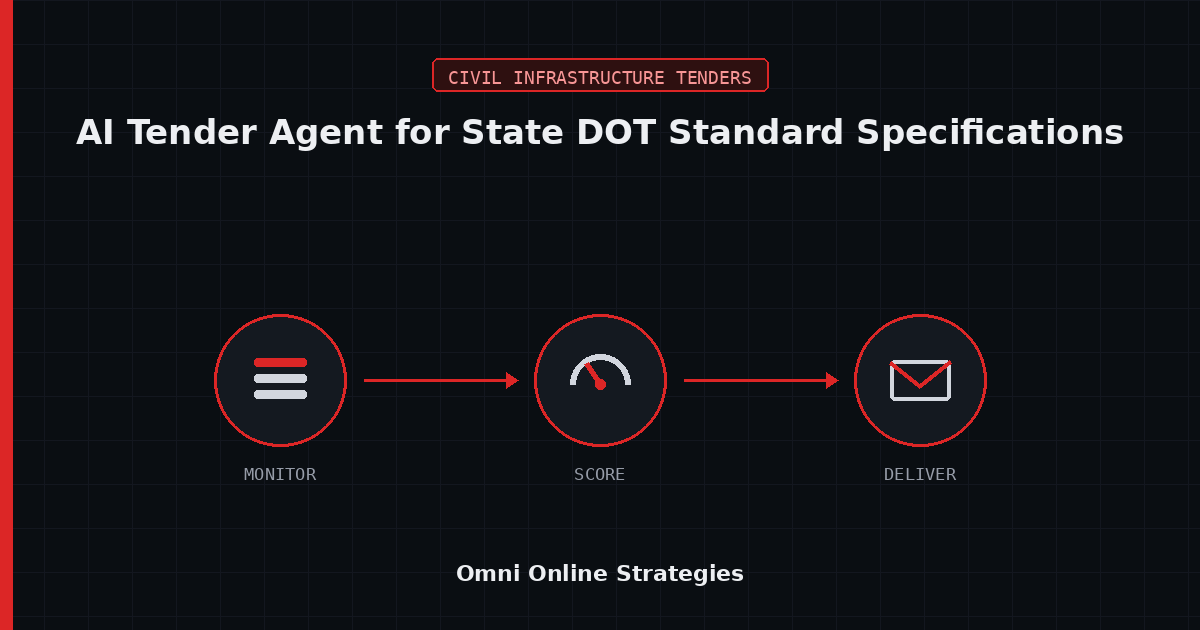
An AI bid agent reads each letting, identifies the standard specifications edition and the special provisions that modify it, and surfaces the controlling methods and the measurement and payment terms on the bid items that matter. The contractor bids against the rules actually in force on the project.
You can see how the agent reads a letting in our AI tender agent demo for civil and infrastructure contractors. It identifies the standard specs edition and the special provisions so the bid is built on the governing rules.