Every electrical package on a public job is built to the National Electrical Code, NFPA 70, and the way an electrical subcontractor reads the code edition and the project's electrical specifications sets the gear, the methods, and the inspections it has to price.
What NEC and NFPA 70 set on an electrical package
The National Electrical Code, published as NFPA 70, governs electrical installations in the United States, adopted by states and local jurisdictions on their own cycles. An electrical package on a public building references the adopted NEC edition along with the Division 26 specifications to set conductor and raceway requirements, overcurrent protection, grounding and bonding, and equipment listings. The adopted edition and the project specifications decide the materials and methods the sub must install and the inspections it must pass.
Why the code basis is easy to misread
The adopted NEC edition, the local amendments, and the project's electrical provisions sit in the specifications and the drawings, not the title, and they vary by jurisdiction. A sub that prices against the wrong edition, or misses an amendment or a listing requirement, carries the wrong assumptions into the bid.
How an AI bid agent reads NEC electrical packages
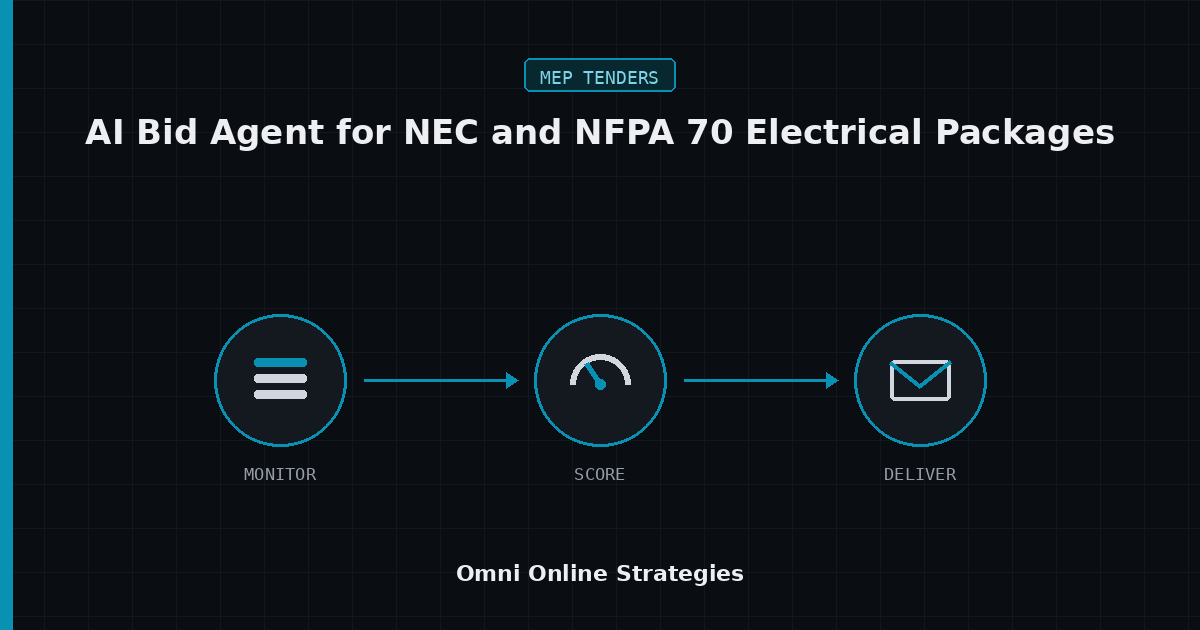
An AI bid agent reads each electrical solicitation or sub package, identifies the adopted NEC edition and the Division 26 provisions, and surfaces the equipment, the listing requirements, and the inspection terms that drive the work. The electrical sub bids against the code basis actually in force on the project.
You can see how the agent reads an electrical package in our AI bid agent demo for MEP subcontractors. It pulls the NEC edition and Division 26 provisions so the package is priced on the actual code basis.