Roadwork has to keep traffic moving safely past the work zone, and the temporary traffic control is governed by the federal MUTCD and the state's adopted version. A contractor that underprices the traffic control plan loses margin on a cost that is rarely in the title.
What MUTCD temporary traffic control requires
The Manual on Uniform Traffic Control Devices, maintained by the Federal Highway Administration and adopted with state modifications, sets the standards for temporary traffic control in work zones: signs, channelizing devices, flagging, lane closures, and the typical applications a contractor must follow. Roadwork solicitations reference the MUTCD and the state's traffic control standards to define the work zone setup, the maintenance of traffic, and the pay items for it. The requirements drive both cost and schedule.
Why traffic control is easy to underprice
The maintenance of traffic and the MUTCD requirements sit in the special provisions, the traffic control plans, and the pay items, and the lane closure restrictions and phasing, not the title, often decide the cost. A contractor that treats traffic control as a minor line item can miss night work restrictions, detour requirements, or device quantities that change the bid.
How an AI bid agent catches traffic control requirements
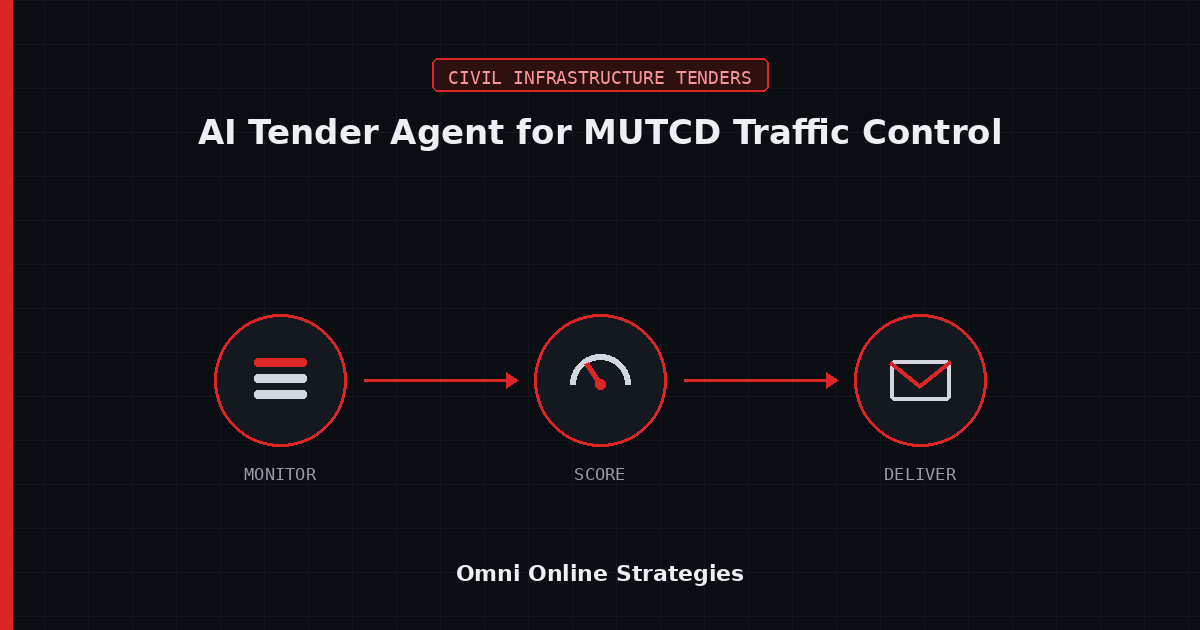
An AI bid agent reads each roadwork solicitation, identifies the MUTCD and state traffic control provisions, and surfaces the maintenance of traffic requirements, the lane closure restrictions, and the related pay items. The contractor prices the work zone on the actual requirements.
You can see how the agent reads a roadwork solicitation in our AI tender agent demo for civil and infrastructure contractors. It pulls the traffic control provisions out of the special provisions so the work zone is priced correctly.