Beyond new bridges, a steady stream of work is the inspection, repair, and rehabilitation of the existing bridge inventory, and these contracts carry their own scoping and traffic challenges a contractor has to read.
What bridge rehabilitation involves
Bridge rehabilitation and repair contracts cover deck replacement and overlays, steel repair and painting, bearing and joint replacement, scour countermeasures, and seismic retrofits, driven by inspection findings against the national bridge inventory standards. The work happens on structures often carrying traffic, so staging, load restrictions, and traffic control shape the means and methods. The scope comes from inspection reports and the rehabilitation plans.
Why rehabilitation scope is easy to misjudge
Rehabilitation scope is defined by condition, inspection reports, repair quantities, and existing as built conditions, which carry more uncertainty than new construction, and the staging and traffic provisions sit in the special provisions. A contractor that misreads the repair scope or the staging can underprice the work and the schedule.
How an AI bid agent reads rehabilitation work
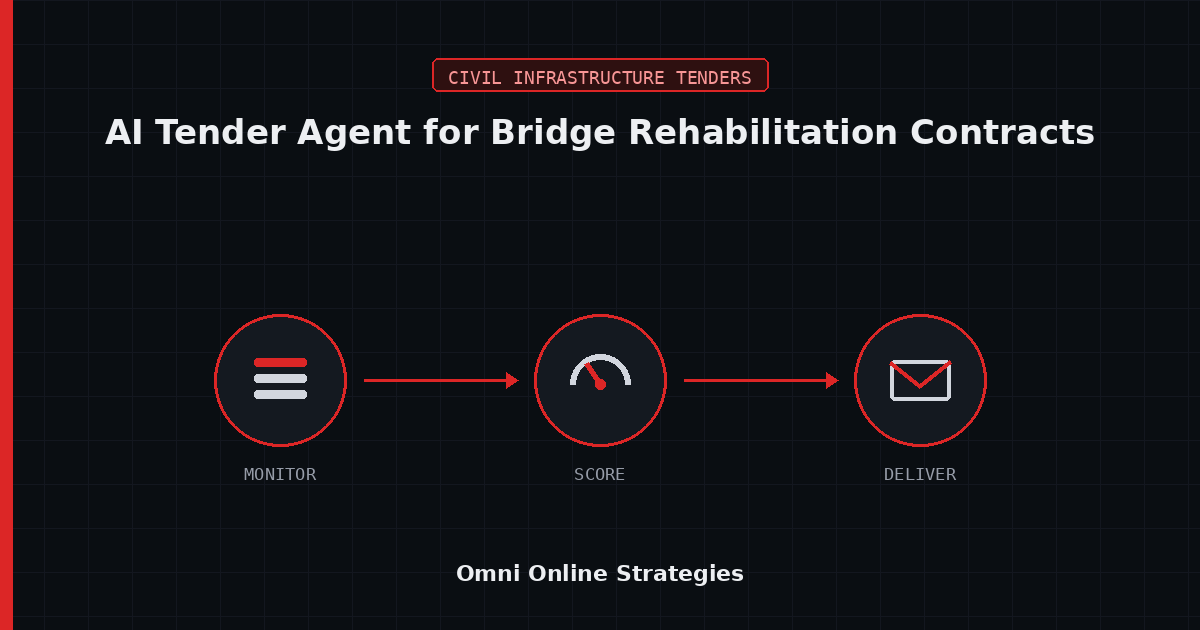
An AI bid agent reads each bridge rehabilitation solicitation, identifies the repair scope and the inspection driven work, and surfaces the staging, traffic control, and load restriction provisions that drive the means and methods. The contractor prices the rehabilitation on the actual conditions.
You can see how the agent reads a rehab solicitation in our AI tender agent demo for civil and infrastructure contractors. It pulls the repair scope and staging provisions so the work is priced on real conditions.