A bridge bid lives or dies on the design and material specifications. State and federal bridge work is designed and built to the AASHTO LRFD Bridge Design Specifications, and the way a heavy civil contractor reads those provisions sets the steel, concrete, and inspection it has to price.
What AASHTO LRFD sets on a bridge project
The AASHTO LRFD Bridge Design Specifications govern how bridges are designed and detailed in the United States, and state DOT bridge work references them alongside the state's own bridge manual. The specifications drive load and resistance factor design, the materials and connection details, and the inspection and quality requirements a contractor must meet. On a letting, the structural concrete, the reinforcing and prestressing, the structural steel, and the deck and bearing details all trace back to AASHTO and the state bridge standards.
Why bridge specifications are easy to underprice
A DOT bridge letting publishes plans, special provisions, and an itemized bid form, and the AASHTO and state bridge requirements that decide fabrication, falsework, and inspection sit across hundreds of plan sheets and the special provisions, not the title. A contractor reading quickly can miss a fracture critical member, a specific concrete class, or a deck pour and curing requirement that changes the cost and the schedule.
How an AI bid agent reads AASHTO LRFD bridge work
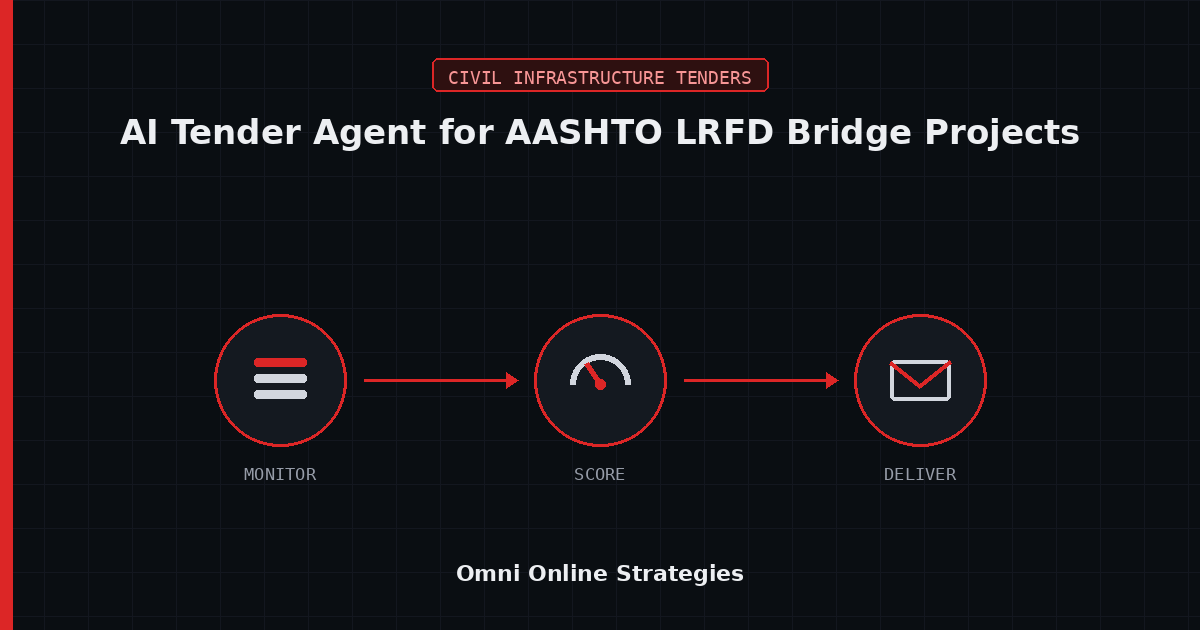
An AI bid agent reads each bridge letting, identifies the AASHTO LRFD and state bridge provisions, and surfaces the structural materials, the fabrication and inspection requirements, and the bid items that carry the most risk. The estimating team sees the controlling specifications before it prices the structure.
You can see how the agent reads a bridge letting in our AI tender agent demo for civil and infrastructure contractors. It pulls the structural provisions out of the plans and special provisions so the structure is priced on the actual specifications.